
Benton Directory Collections by Year
Benton's historical directory shelf is not a neat annual series. The firmest evidence comes from a National Register nomination whose bibliography cites Benton city directories used by preservation researchers, plus a separately verified telephone book in the Saline County History and Heritage Society inventory. The broader collection adds census, obituary, probate, marriage, map, and newspaper sources that can test a directory lead. The table distinguishes a verified cited year from a repository claim. It does not imply that every cited volume is held at one desk or that all pages are online.
| Collection | Years | Where Held | Access |
|---|---|---|---|
| Benton city directories cited by Arkansas Heritage | 1916, 1922, 1924, 1961, 1965, 1981 | Repository must be confirmed | Bibliographic evidence; ask to inspect the edition |
| Benton-Bauxite telephone directory | 1951 | SCHHS CD-ROM inventory | Contact the research center |
| Saline County census publications | 1840-1920, selected decades | SCHHS | Indexed and transcribed volumes |
| Saline obituary index | 1930-present | Saline County Library | Surname PDFs, then newspaper retrieval |
| Saline court and probate microfilm | 1836-1896 title; some indexes through 1955 | FamilySearch | Some access may require an affiliate center |
| Benton Sanborn maps | 1915 and 1921 | Library of Congress | Free digital map collection |
The gaps matter. No authoritative catalog found an exhaustive publisher run, a firm first or last household-directory year, or a verified reverse-directory series. Before quoting a household field, identify the exact volume and inspect its title page and key. That restraint keeps the Benton city directory useful rather than turning a citation into an invented run.
Verified Benton Directory Years
The years 1916, 1922, 1924, 1961, 1965, and 1981 appear in the bibliography for the Benton Commercial Historic District nomination. Those dates show what historians consulted while documenting downtown buildings. They do not identify a publisher, call number, or complete local holding. Search the Arkansas Heritage National Register records, then take the citation to SCHHS, the library, or the Arkansas State Archives and ask for the precise edition.
The SCHHS CD-ROM inventory gives a firmer item-level lead: a 1951 Benton-Bauxite telephone directory scanned in 2009. The captured inventory below shows why the item is central to local directory research.
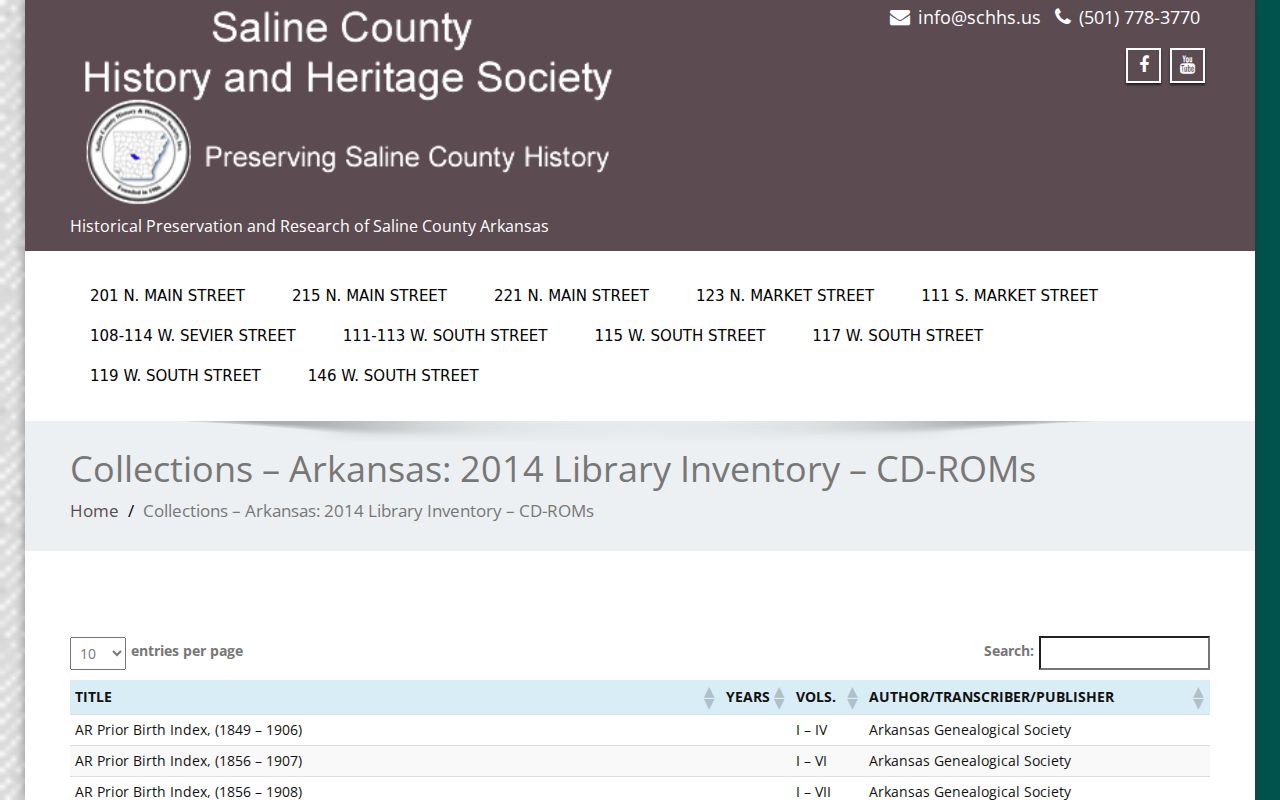
A telephone listing can connect a name, place, and phone service at one point in time, but it may omit unlisted customers and household members. Confirm the listing with a census, obituary, deed, or newspaper notice.
Note: A cited year proves use of an edition, not that a complete digital Benton city directory can be searched today.
Benton Directory Research Desks
The SCHHS Archives and Family Research Center is the strongest local starting point. It is at 123 N. Market Street in Benton, serves members and nonmembers, and asks researchers to arrange an appointment. Its holdings span family files, county materials, CD-ROMs, court-related indexes, ancestor charts, school history, military works, and issues of The Saline. Because donated family material can vary in source quality, compare any compiled claim with the original courthouse, church, census, or newspaper record.
The Saline County Library discovery service connects the Bob Herzfeld Memorial branch, Gann Museum, databases, obituary files, and local collections. Its digital doorway is shown below.
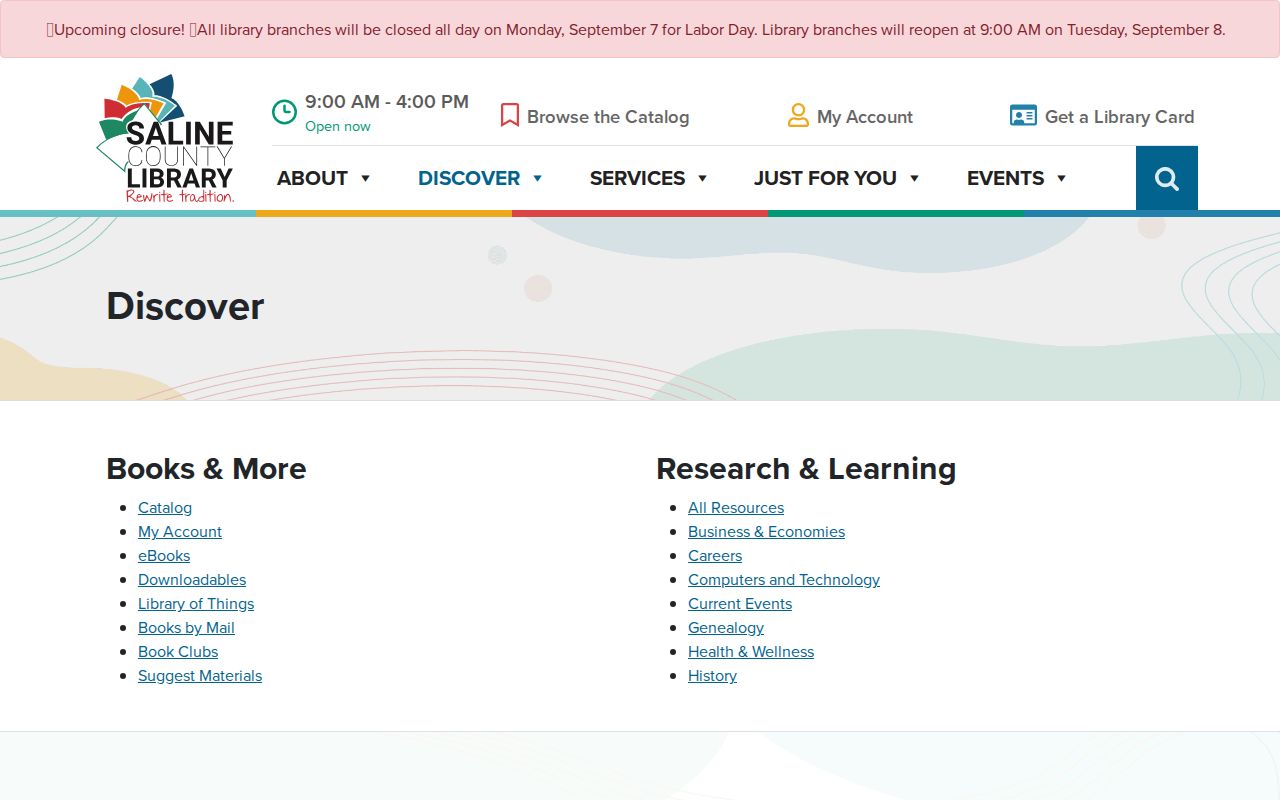
If a volume is not on the shelf, staff may still identify a catalog record, newspaper issue, microfilm source, or referral. The Arkansas State Archives and FamilySearch catalog are the next stops for county microfilm, maps, naturalization, probate, marriage, tax, and court records.
Reading Benton City Directory Evidence
No household page from a verified Benton volume was available for field-by-field inspection. Generic directory customs therefore cannot be presented as Benton facts. A researcher should photograph the title page, publication date, page containing the entry, and the volume's own abbreviation key. Then record only what that edition actually prints. A name or address is a clue, not proof that every member of a family lived there for the whole year.
The verified 1914 Ayer directory is a useful comparison. It is a business and newspaper directory, not a household book. Its Benton entry reports the city and county populations, transport and trade context, local industries, a newspaper's name and frequency, its founding information, and editor or publisher. This sample inventory shows the distinction:
| Place fields | City, state, population, county population, and regional location |
|---|---|
| Trade context | Rail, telegraph, express, banking, and industries |
| Publication fields | Newspaper name, frequency, politics, and establishment |
| Named person | Editor or publisher, including L. B. White in the Benton entry |
| Not established | No household, spouse, renter, or reverse-address fields were verified from this source |
- Criss-cross directory
- A book arranged by street or phone number rather than surname. No verified Benton run was located.
- Householder index
- An address-order list of a household's named head. Its presence must be checked in each volume.
- Abbreviation key
- The publisher's own list explaining shortened words and marks. It controls how an entry should be read.
- Index versus image
- An index points to a record; an image shows the source page that should be checked.
Benton Directories Meet Census Rolls
SCHHS publishes indexed Saline County census volumes for 1840, 1850, 1860, 1870, 1880, 1900, 1910, and 1920. The 1910 work is especially useful because it can be read alphabetically and by dwelling number. A dwelling sequence can rebuild the order of nearby households even when the old street label is weak. Federal census schedules are open through 1950, which makes the 1951 telephone book a close follow-up rather than a substitute.
The Census Bureau's historical release context helps set the public-access boundary. The captured federal resource below points researchers toward that history.
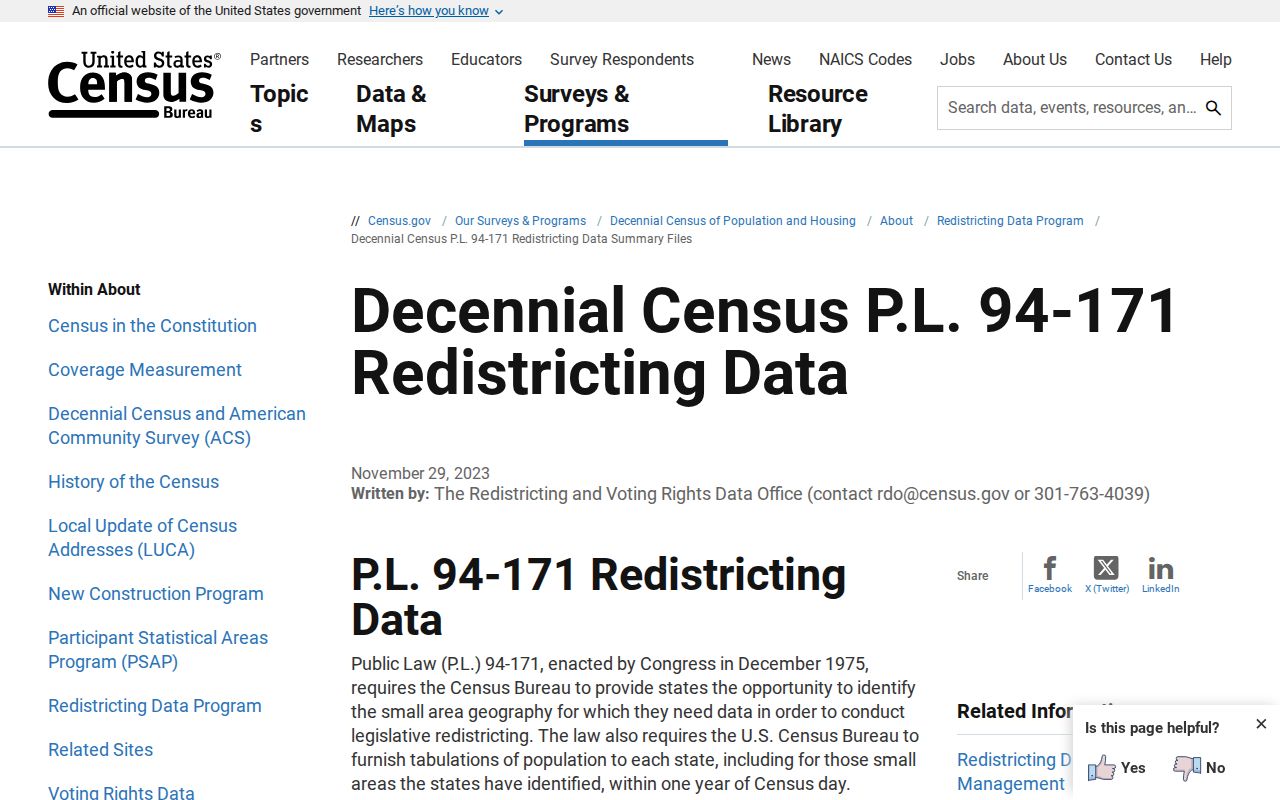
Pair a directory date with the nearest open census. Compare names, ages, kin, birthplace, and place. If the sources conflict, keep both readings until a deed, obituary, probate file, or newspaper resolves the identity.
Benton History Beyond Directories
The local shelf has far more than city directories. SCHHS publications include The Saline, indexed from April 1986 forward; the 49-page 1890 Saline County Taxpayers; ancestor charts from 44 contributors; Early Saline County Records; a 158-page school history with more than 100 images; and a military work describing roughly 1,000 Saline County Confederate soldiers. The current Benton School District staff directory is a public contact source, not a historical household roll. Ashby Funeral Home abstracts span 1916-1928 and 1929-1940, adding residence, burial, death, and remarks clues.
The SCHHS publications catalog shows these companion sources and how print copies can be ordered.
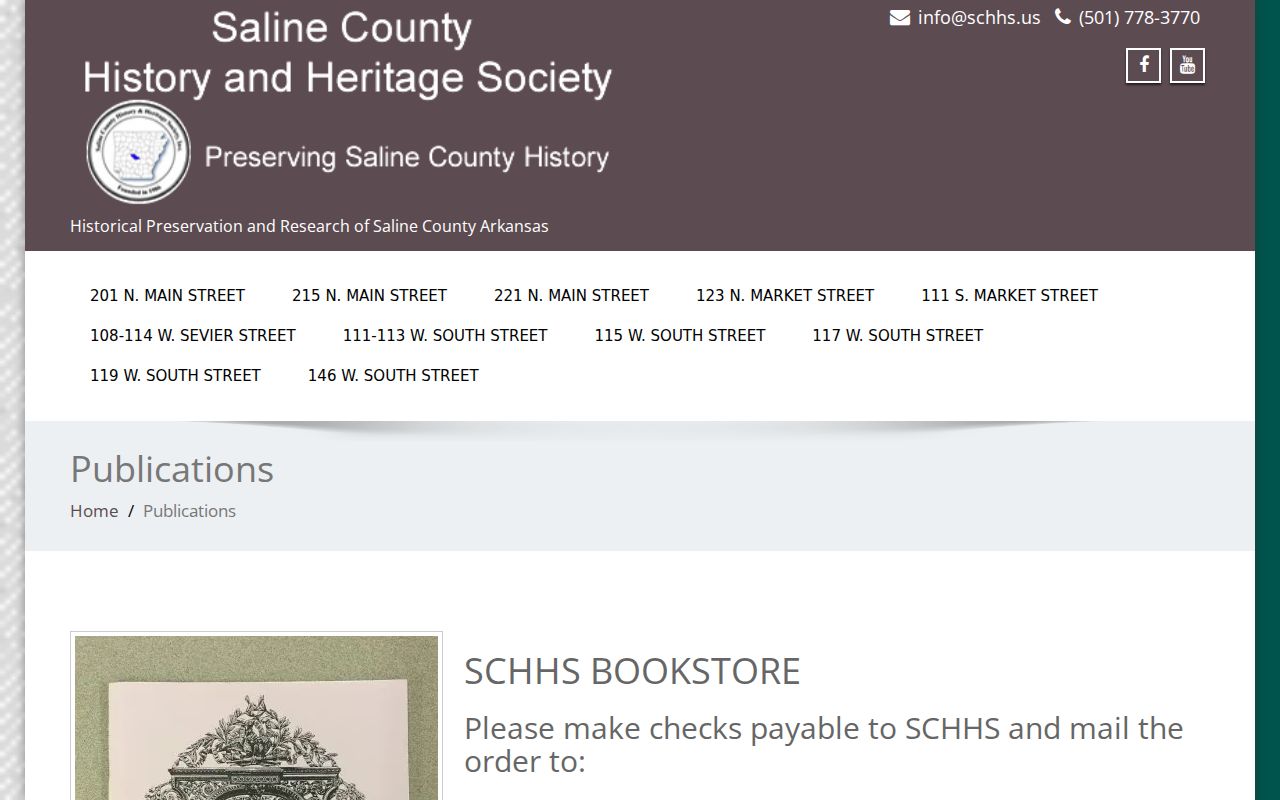
School histories and yearbooks can reconnect classmates. Military and naturalization material may track a person before or after Benton. Religious and Masonic indexes are historical finding aids, not proof of current membership. Each source answers a narrow question and should be cited by title, year, and page.
Benton Newspaper Names Changed
A directory lead often ends in a newspaper search, but Benton titles changed. The Saline County Digest dates to 1876. A rival Saline Courier began in 1882. After the Saline County Review changed hands in 1883, the Courier name continued; consolidation produced the Times-Courier in 1897, followed by the Benton Courier around 1905 or 1906. Search all title forms near the relevant date.
| Year | Benton newspaper trail |
|---|---|
| 1876 | Saline County Digest |
| 1882 | Rival Saline Courier established |
| 1883 | Saline County Review changed hands; Courier name used |
| 1897 | Titles consolidated as the Times-Courier |
| 1905/06 | Benton Courier title in use |
The Saline County Library obituary index covers 1930 to the present in surname PDFs. Its columns give the name, death date, and newspaper date and page. Capture those details, then retrieve the notice through the library's newspaper holdings or database access. A death notice can link a directory name to kin, church, cemetery, funeral home, and prior residence.
Note: A newspaper title gap can look like a missing resident; search the predecessor and successor titles before ending the trail.
Benton Records Survived Without Fire
Saline County formed in 1835, and Benton became the county seat in 1836. SCHHS describes the county's records as virtually intact because no courthouse fire destroyed the series, though neglect did cause some losses. That history is important. A blank online search does not mean the record never existed. Older tax, probate, deed, newspaper, and court material may remain in a book, microfilm run, clipping file, or archive catalog.
A vivid example came from the courthouse itself. A September 18, 1902 issue of the Times-Courier had been sealed in the cornerstone. It was recovered when the cornerstone was opened in 1994 and transferred to Gann Museum. The item fixes a publication in a place and date while preserving names and local context that may not appear in a city directory.
Trace Families Through Benton Directories
A sound family-history trail starts with a known name, address, and approximate year. It moves between sources rather than forcing one book to prove every fact. Benton grew with bauxite and aluminum work, linking families across Benton, Bauxite, Bryant, and Little Rock. Search those place names when a person seems to vanish. Older Saline County boundaries also changed, so some records may fall under predecessor or successor county catalogs even when the land stayed put.
- Locate the name in a verified Benton city directory citation, the 1951 phone book, or an SCHHS census index. Save the exact spelling and source page.
- Compare the closest open census. Use the 1910 dwelling-number order when the goal is to place nearby households.
- Check the Library of Congress Sanborn collection for the 1915 or 1921 Benton sheet, building footprint, use, and number. A map shows the site, not its occupants.
- Search the library obituary index and retrieve the cited newspaper page. Follow kin and death clues into probate and cemetery sources.
- Verify ownership through the Saline County deed record. For modern address-keyed work, use the Benton street directory process.
A missing name can mean a move, death, changed spelling, omitted listing, altered city label, or absent volume. Test each cause. Do not infer one from silence.
Prove a Benton Directory Lead
Directory evidence becomes much stronger when two independent records agree. A deed proves a recorded title transfer, not who slept at the address. A census names an enumerated household on its census date. A Sanborn sheet documents the building and block. Probate identifies an estate and public parties. The obituary may connect kin and residence, while the directory supplies the time-stamped lead that joins them.
Online access is only one channel. Ask SCHHS or the library for shelf and catalog help, search FamilySearch and the Arkansas State Archives, and visit or contact the Saline County Circuit Clerk for older or certified land and court records. A narrow request should give the name, date range, record series, and known address. The clerk need not conduct open-ended research or create a new record.